

Digital Logistics: Proxy vs. PandaVPN—Which One Is Your Right Secure Carrier?
 Sharon
  2026.09.04
Every click, email, and upload we make online behaves like a cargo truck navigating a massive global highway. In the realm of digital logistics, safeguarding this data traffic boils down to two distinct transport standards: Proxies and Virtual Private Networks (VPNs).
While many view them interchangeably as simple tools to alter an IP address, they offer vastly different levels of security and operational architecture. Let’s dissect their core differences to help you choose the right carrier for your digital assets.

1. Data Transportation: Courier vs. Armored Fleet
The fundamental distinction lies in how these carriers handle your shipment.
Proxies: The App-Specific Courier
Operating primarily at the Application Layer (Layer 7), a proxy acts like a local courier hired for a single, specific task. When configured, it only reroutes traffic for that explicit application (such as your Chrome browser).
-
The Logistics Catch: It modifies the return address on that specific parcel, but standard HTTP proxy traffic remains unencrypted. Furthermore, your background applications (such as system updates, email clients, or messaging apps) continue to travel completely exposed on the main highway.
PandaVPN: The Armored Transport Fleet
Operating at deeper network layers, a high-tier provider like PandaVPN establishes a system-wide virtual network interface. It intercepts and secures 100% of your device’s outbound traffic.
-
The Logistics Advantage: It is equivalent to parking a bulletproof, securely locked container truck right at your doorstep. Whether you are actively browsing, running background apps, or syncing cloud data, every single packet is immediately packed into an armored hull using leading connection protocols (OpenVPN and WireGuard), traveling through an exclusive secure tunnel.
2. Technical Audit: Core Capability Matrix
To understand their technical boundaries, we look at three critical operational metrics:
| Feature | Standard Proxy | PandaVPN |
| Scope of Protection | Localized: Only covers explicitly configured apps; ignores all other background traffic. | Global / System-Wide: Simultaneously protects all multi-platform devices with one-click access. |
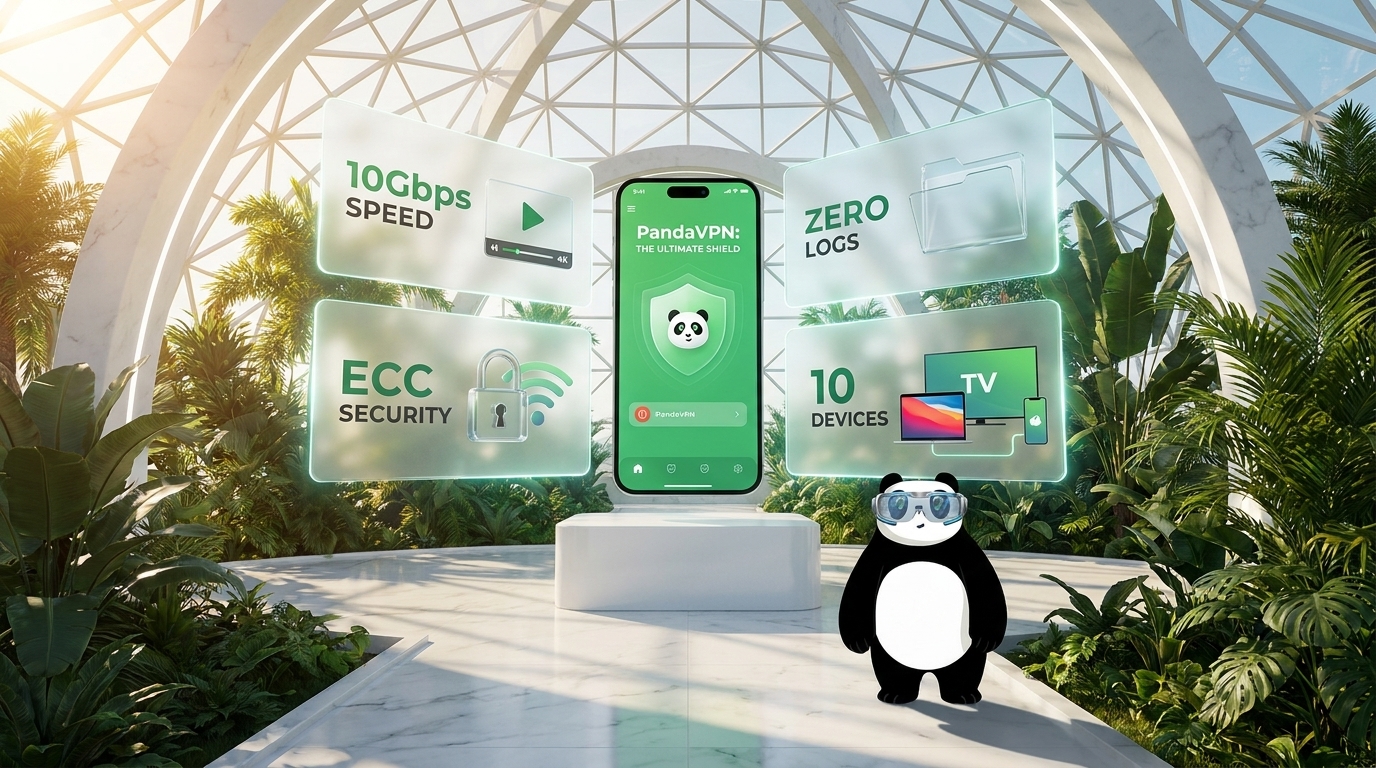
| Encryption Strength | Minimal to None: Built for routing and IP changing; lacks robust end-to-end encryption. | Military-Grade: Utilizes advanced ECC encryption technology to prevent data interception. |
| Leak Resistance | Vulnerable: Prone to WebRTC and IPv6 leaks that can expose your true location to scripts. | Fortified: Features built-in leak protection, private DNS routing, and an automated Kill Switch. |
3. Scenario-Based Decision Guide
Your choice depends heavily on your specific deployment environment:
-
Bypassing Geo-Restrictions for Global Media: Standard proxies can suffer from bandwidth throttling. PandaVPN provides optimized streaming routes with patented acceleration technology, making it the ideal choice for fluent playback on platforms like Netflix, Hulu, and HBO Max without data caps.
-
Working via Public Wi-Fi: Public networks are highly susceptible to intercept algorithms. A proxy leaves background apps exposed, whereas a VPN offers comprehensive encryption that completely shields your session from packet sniffing.
-
Handling Confidential Business Data: For financial transactions or proprietary data, the ECC encryption and strict no-logs policy of a verified VPN ensure that your activity remains entirely unrecorded and secure.
-
High-Volume Data Scraping or Multi-Account Management: If your primary objective is lightweight web crawling or rotating IPs without data overhead, standalone proxy endpoints remain highly efficient.
4. The Unified Approach: How PandaVPN Bridges the Gap
Modern network demands require both granular flexibility and ironclad security. PandaVPN resolves this trade-off by integrating specialized routing features directly into its client architecture:
-
Split Tunneling (App-Specific Routing): You don’t always have to choose between a proxy’s agility and a VPN’s security. With Split Tunneling, you can designate exactly which applications utilize the encrypted VPN tunnel while allowing local traffic to run normally. This delivers proxy-like flexibility backed by full ECC encryption.
-
Extensive Global Infrastructure: Across major operating systems—including Windows, macOS, iOS, Android, Linux, and Android TV—the service grants access to over 6,000 servers across 100 countries. This expansive network ensures high-bandwidth, low-latency connections globally while keeping your underlying IP address concealed.
A proxy is a localized tool suited for specific, rapid data re-routing. A premium service like PandaVPN serves as a comprehensive security ecosystem that guards your entire digital footprint. For users seeking complete privacy on public networks, stable global streaming, and reliable cross-platform defense, deploying a dedicated system-wide network shield is the optimal strategy.

Related Posts


Featured Posts